The Stone Remains
A quiet, misty summer morning, and an old proverb that refused to remain where it began.
They say never to speak ill of the dead.
Perhaps that counsel was never intended to protect the dead. They are beyond injury from our words. Perhaps it was meant instead for those left behind; for the spouse, the child, the friend whose grief still listens, and to whom an outsider’s cold accounting of faults might bring only pain.
There is kindness in choosing the moment, the audience, and the purpose of a truth.
Yet silence has a cruelty of its own. If we may speak of the dead only in praise, then those who cannot be honestly praised may cease to be spoken of at all. They are not forgiven, nor understood; they are simply, quietly, forgotten.
It may be better to speak truthfully of the dead, but with charity. To remember a person whole; generous and selfish, brave and foolish, loving and difficult. Honest remembrance preserves more than reputation. It preserves humanity.
This thought leads, perhaps inevitably, to statues.
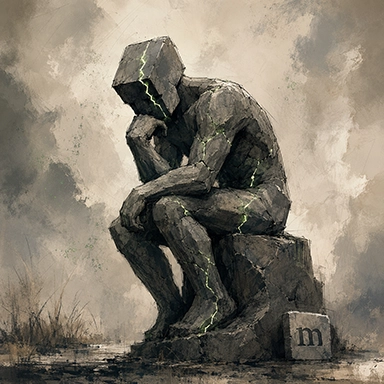
A statue does not merely record that someone lived. It is raised because one generation chose to venerate something about them. Often it is a single virtue, achievement, or service, carved larger than the rest of the life. The person becomes less a person than a vessel for the value their society wished to display.
Later generations see with a different light. They notice what the sculptor omitted. A virtue once celebrated may stand beside conduct now condemned; a life raised in stone may expose not only the flaws of its subject, but the unfinished morality of the society that raised it.
The outrage that follows can itself be evidence of growth. We recognise harms our predecessors ignored, excused, or could not yet name. Moral progress is real enough to make the past uncomfortable.
But discomfort can tempt us into simplicity.
If a society chooses to remember only those who meet its newest standards, it condemns itself to remember no one for long. Every age judges the last and is judged by the next. Our own virtues will one day be examined beside failures we cannot yet see. Some necessity we defend will be understood as cowardice; some progress we celebrate will reveal its cost; some monument we raise will become a lasting mark of our own shortcoming.
Long-lasting, perhaps, but not indelible.
We should distinguish remembrance from honour. A history book, a museum, a public square and a plinth do not all make the same claim. A society may decide that a person no longer deserves elevation without deciding they deserve erasure. A statue can be moved, reinterpreted, answered by another work, or allowed to acquire a history beyond the intention of those who first raised it.
For the destruction of art diminishes more than its subject. The work bears witness to the hands that made it, the age that commissioned it, and the values that age wished to make permanent. Even an objectionable monument can become evidence; not merely of one person’s life, but of a society still growing.
Sanitised spaces may be comfortable, but they are poor teachers. They allow us to imagine that our inheritance arrived cleanly; that civilisation was built by people who either deserve our approval or can be removed from the story.
Yet all is built upon what came before, flaws and all.
Why stop at the statue when the stone remains?
Rename the building, perhaps, but its walls were raised by hands you would not honour. The road was laid by strangers whose beliefs you might condemn. The language in which you condemn them was shaped by imperfect mouths. The institutions that taught you to recognise injustice were themselves inherited from generations that practised it.
If impurity of origin were enough to demand destruction, we would eventually find ourselves with nowhere left to stand.
This is not an argument that every statue must remain where it was placed, nor that inherited honour can never be withdrawn. Public space belongs to the living as well as the dead. We may choose what we wish to elevate now.
It is instead an argument for humility in the choosing.
We inherit the world twice. First in stone, timber, roads, laws, language and art. Then in the moral understanding by which we judge those things. Both inheritances came through the same flawed humanity.
To reject the first while imagining the second immaculate is to misunderstand how progress is made. We did not emerge apart from the past, fully formed and morally complete. We were sheltered by it, taught by it, wounded by it, and given the tools with which to exceed it.
One day we shall become the past.
Others will inherit our buildings, our certainties, our compromises and our monuments. They will see what we could not. They may remove what we raised, rename what we thought permanent, and wonder how people who understood so much remained blind to so much else.
May they judge us with greater wisdom than certainty.
May they remember us neither as saints nor villains, but as imperfect people who inherited imperfect foundations; who sometimes mistook fashion for virtue and convenience for necessity; who nevertheless tried, failed, learned, and built.
The stones do not ask for reverence.
They ask that we remember what they carried, what they concealed, and the long, unfinished road by which we learned to see it.
Coda
The Stone Remains
They tell us not to speak ill of the dead;
perhaps not for the dead,
who have long since ceased to hear,
but for the living,
whose grief still listens.
Yet silence has its own cruelty.
For what is forgotten
is lost more surely
than what is remembered honestly.
So we carve our heroes into stone,
raising them above ourselves,
certain that we have seen more clearly
than those who raised the last.
But what shall we choose to venerate?
What monuments will we leave
as enduring witnesses
to the virtues we mistook,
the blind spots we called progress?
If each age remembers
only those who satisfy
its newest conscience,
then each age shall inherit
an emptier world
than the one before.
For no hand has built
without blemish.
Why stop at the statue
when the stone remains?
Rename it, perhaps,
but it was quarried
by those you would condemn;
laid by hands
you would not honour;
raised to give you shelter,
to give you home.
Civilisation is an inheritance,
not an immaculate conception.
We do not stand
upon the virtue of our ancestors,
but upon their labour;
their genius,
their folly,
their hope.
The road beneath our feet
was laid by strangers.
The house around us
was raised by ghosts.
Their flaws endure.
So too do their gifts.
One day
we shall become the ghosts.
May those who follow
judge us with greater wisdom
than certainty.
May they remember us
not as saints,
nor as villains,
but as people;
trying,
failing,
building;
leaving behind
not perfection,
but foundations.
A thought in return?
If this wandering led your thinking somewhere unexpected, I would enjoy hearing where.
mental@mentalblock.net